
Welcome to NASA.
You're cleared for launch.
For more than 65 years we've turned what was impossible yesterday into mission control today. Now you're part of it. Ask the assistant anything, or jump straight into your first 90 days.
Ask Mission Control
Onboarding logistics, missions, centers, anything NASA — go ahead.
You belong here.
Whoever you are, whatever your background — if you're curious about how the universe works and stubborn enough to figure it out, you're our kind of person. Over the next 90 days you'll learn the rhythms of the agency, meet the people behind the missions, and start making your own mark. We built this microsite so nothing about Day One catches you off guard. Welcome aboard.
Preboarding Checklist
Complete these before Day One so you can hit the ground running. Progress is saved automatically in your browser.
Your first day, hour by hour.
No surprises — here's exactly how Day One at NASA Headquarters will unfold. Field-center hires receive a tailored variant from their onboarding lead.
Head to the HQ reception desk. Your welcome packet and PIV badge will be waiting.
Meet the Office of the Chief Human Capital Officer for a warm welcome to the agency.
Sit down with your manager for introductions and a team mission overview.
Get your laptop, SSO, VPN, and MFA configured with help from the IT desk.
Lunch is on us. Connect with your new colleagues in the HQ cafeteria.
Review your first quarter objectives and align on expectations.
Explore HQ and meet your Lift-Off buddy — your go-to person for questions.
Ask remaining questions, review tomorrow's agenda, and head home.
What to bring & what to wear.
A quick pre-flight check so you walk in confident on Day One.
What to Bring
- Government-issued photo ID (REAL ID compliant for I-9 / PIV)
- Signed offer letter (if not submitted electronically)
- Banking details for direct deposit
- SF-85 confirmation email
- A notebook or your favorite note-taking app
What to Wear
- Business casual is the agency default
- Polos, button-downs, blouses, dresses, slacks, or clean jeans
- Comfortable walking shoes — center tours involve real distance
- Mission-patch swag is welcome and encouraged
- Lab/cleanroom roles: your manager will brief you on PPE separately
"Welcome to the team. I've been at NASA for twelve years and the feeling I had on Day One — that I was somehow lucky to walk through those doors — has never gone away. Don't worry about knowing everything in week one. Ask questions, take notes, meet people. We hired you because we trust you. The mission is the whole point; everything else we'll figure out together."
For the benefit of all.
NASA explores the unknown in air and space, innovates for the benefit of humanity, and inspires the world through discovery. From Apollo to Hubble to Perseverance to Artemis — every mission begins with people like you.

65+ years of firsts.
The National Aeronautics and Space Act establishes NASA as a civilian agency.
Neil Armstrong and Buzz Aldrin become the first humans to walk on the Moon.
STS-1 launches the era of reusable human spaceflight.
Hubble Space Telescope opens a new window on the cosmos.
The first ISS modules launch — humans have lived in space ever since.
Rover touches down on Mars; Ingenuity makes the first powered flight on another world.
Webb returns the deepest infrared image of the universe ever taken.
Returning humans to the Moon and on to Mars — and you're part of it.
Your first 90 days, plotted.
A clear flight plan from arrival to full mission status. Your buddy and manager will guide every checkpoint.
- Badge & workstation pickup
- Meet your onboarding lead
- Sign Code of Conduct & security briefing
- Set up email, VPN, and NASA SSO
- Mission & values orientation
- Tour your home center
- 1:1s with manager and crewmates
- Meet your Lift-Off buddy
- Complete compliance training
- Shadow an active mission team
- Define first-quarter objectives
- Submit your intranet bio
- Own a deliverable end-to-end
- Present at team stand-up
- Quarterly review with manager
- Join a cross-center working group
Ten centers. One crew.
Wherever you're stationed, you're part of a network spanning the continent and partnerships with ESA, JAXA, CSA, SpaceX, Boeing, and Blue Origin.
A workplace built for hard problems.
Bright, collaborative office space at every center with quiet rooms, lab access, and visitor-grade conference facilities.
Wind tunnels, vacuum chambers, cleanrooms, and supercomputers most engineers only read about — yours to use.
Enterprise GitHub, JIRA, MATLAB, ANSYS, classified networks where needed, and best-in-class cyber protections.
Most roles support telework 2–3 days/week. Field assignments and travel come with the territory on operational teams.
How the agency is organized.
Crewed missions, ISS operations, Artemis lunar architecture.
Earth science, heliophysics, planetary science, astrophysics.
Sustainable aviation, advanced air mobility, supersonic X-planes.
Power, propulsion, autonomy, and in-space manufacturing R&D.
Procurement, HR, IT, security, and facilities across all centers.
Coordination with ESA, JAXA, CSA, Roscosmos, and commercial partners.
Meet the leadership team.
Sets agency strategy & represents NASA to the White House and Congress.
Day-to-day operations across all mission directorates and centers.
Top career executive — keeps the agency running across administrations.
Manages the agency's annual budget and Congressional reporting.
How we show up.
Six commitments every NASA employee — civil servant, contractor, or intern — carries into every meeting, lab, and launch.
Mission safety is the prerequisite for everything else we do — on the pad, in orbit, or at the desk.
We hold ourselves to the highest standards of honesty, ethics, and stewardship of public trust.
We respect diverse perspectives and know the best missions are crewed missions — never solo.
We are a learning organization. We measure rigorously, share openly, and continually improve.
We pursue equity in everything from hiring to mission design. Different lenses produce stronger answers.
We are driven by the questions humanity hasn't answered yet — and we work to inspire the next generation.
Federal benefits, mission perks.
Comprehensive medical, dental, and vision through the federal benefits program.
Federal 401(k)-equivalent with agency match up to 5%.
13–26 days annual leave (by tenure), 13 sick days, and 11 federal holidays.
Tuition assistance, certifications, and access to NASA SATERN learning catalog.
Funded conference travel for technical staff and field assignments.
Federal Employees Retirement System — defined-benefit pension on top of TSP.
Keep your trajectory rising.
Agency history, mission architecture, federal acquisition basics, and ethics — required for all new hires.
Discipline-specific training: spaceflight systems, mission assurance, GNC, software engineering at NASA, planetary protection.
Multi-week programs for team leads, branch chiefs, and senior executives via the NASA Leadership Institute.
Thousands of self-paced courses and Pluralsight/LinkedIn Learning access included for federal staff.
The rules of the road.
Federal employment carries real responsibilities. Read these in week one — bookmark them for the long haul.
Federal ethics rules, conflict-of-interest, gifts, and outside activities.
Handling of CUI, ITAR/EAR, and classified material; SBU vs public communications.
Zero-tolerance policy and how to report concerns confidentially.
Eligible roles, core hours, and remote-work agreements.
Per-diem rules, GovTrip filing, and conference attendance requirements.
FAR-compliant purchasing and contractor interaction guidelines.

Everything you need, in one console.
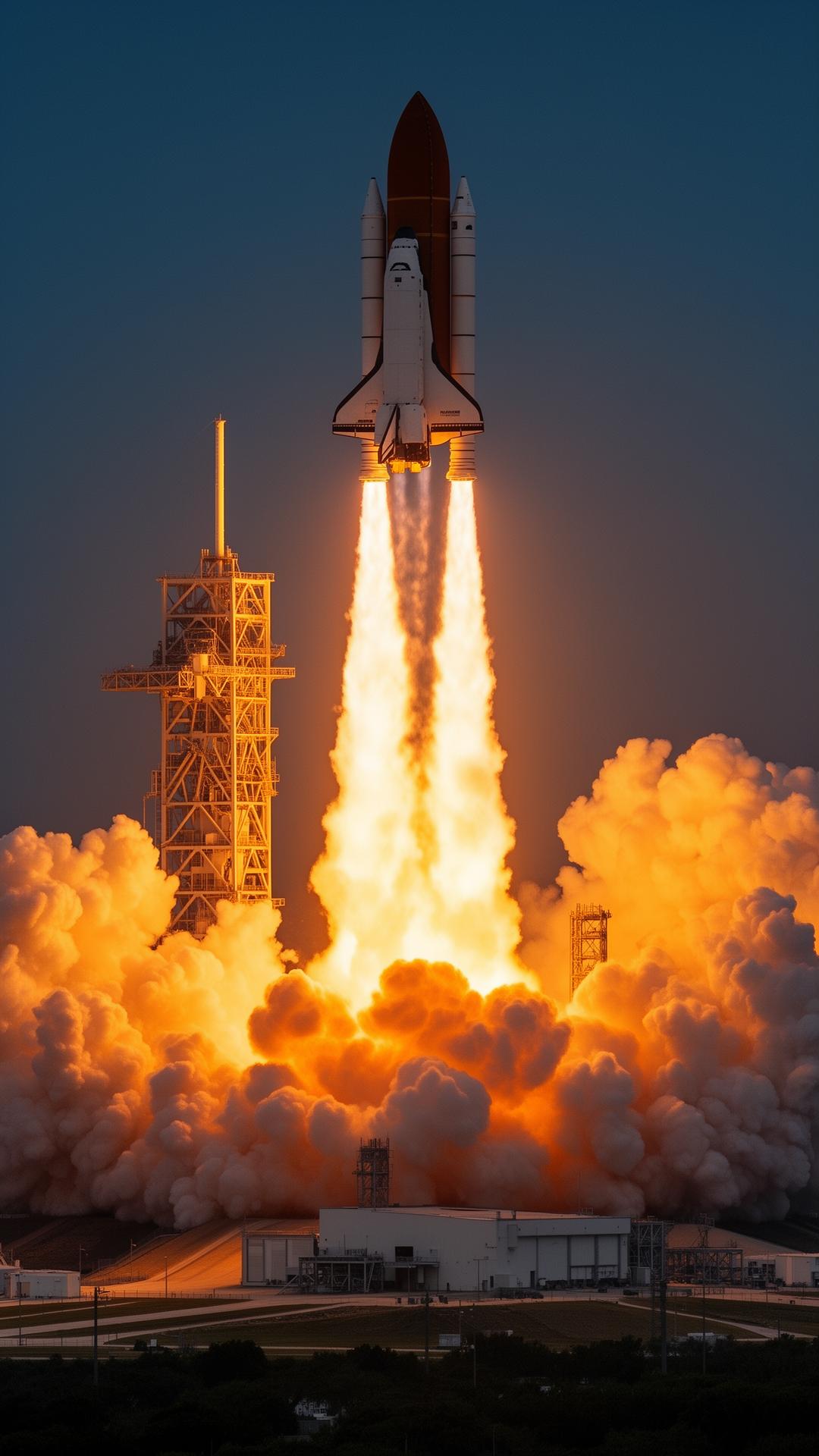
We don't just go to space. We make it possible.
Curiosity built this place. Discipline keeps it flying. Every engineer, scientist, communicator, accountant, and intern carries a piece of the mission.
"That's one small step for man, one giant leap for mankind."
Pre-flight questions.
When does my official onboarding start?+
Orientation begins at 09:00 EST on your first Monday at NASA Headquarters in Washington, D.C. Remote and field-center hires receive a tailored schedule from their onboarding lead.
What do I need before Day One?+
Complete the SF-85 paperwork, upload your IDs to the secure portal, and respond to the credentialing email from the Office of Protective Services.
How do I get a buddy?+
Every new hire is paired through the Lift-Off Buddy Program within their first week. Your manager submits the request; you'll meet your buddy by Day 5.
Can I switch centers later?+
Yes. Internal mobility is encouraged after your first 12 months. Talk to your manager and check the Internal Opportunities board on the intranet.
Is travel required?+
It depends on your role. Mission operations, field campaigns, and conference attendance involve travel. Most HQ and research roles travel a few times per year.
Do I need a clearance?+
Most roles require a Public Trust or Secret clearance. The Office of Protective Services will guide you through the SF-85 or SF-86 process.
Got questions? Reach out.
No question is too small. Your onboarding lead has heard them all before — and they'd rather hear yours than have you guess.